
The First Day of School & Managing Emotions
As a mom who once worked at a preschool and later a school, I have seen my fair share of different parents and kids. I can tell you the way that you establish that first day and week of school will determine how a child will do for the rest of the year. This is why I felt compelled to talk about my feelings, my ways of handling different aspects of the first day of school and how we do it as a family. I remember so clearly the my sons first day of school. I have pictures of him standing next to his kindergarten teacher feeling a bit nervous about what school had in store for him. This picture is etched into my memory never to leave me as the first of all first days of school.
The first day of school jitters never truly fade, even after you’ve graduated. I still feel those butterflies fluttering in my stomach every year, when Summer comes to an end. That same mix of nerves and excitement I had as a child come rushing back—it’s as if I am the one meeting my new teacher, and classmates again! The anticipation builds all summer long, and when that special morning finally arrives, our home is buzzing with energy and hope for the adventure ahead. fast forward to the first day of school; as my child enters the classroom, the nervousness melts away, replaced by pure joy and laughter. Friends reunite after a long summer apart. Voices fill the room with stories of epic vacations and new discoveries. A wave of excitement sweeps through the class. It’s only when the teacher gently announces, “Time to find your seats!” That everyone settles in, ready to begin a brand-new chapter together. How a mother’s heart beams with joy but also weeps as she witnesses her children begin to grow and become more independent.
psst…. “As an Amazon Associate I earn from qualifying purchases”
What are the best ways to get your child and yourself, prepared for the first day of school?
Talk About It: Start talking about what they should expect at school a few weeks before school starts or throughout the Summer. I like to talk about these things as we shop for different supplies. I use each type of supplies that we pick out to talk about what they will be using it for. Make it exciting. If you but colored pencils, talk about what they will draw at school. What friends will they make, and if they already have friends at school talk about if they will be in the same class together. I also like to sneak in “this will help keep your desk clean and organized” talk as we shop.
Visit the School: Every year my kid’s school has a huge welcome back block-party style event. They rent out food trucks and a bubble-making ice cream truck to hype them up. I can only imagine the great dreams they have the night before the first day.
As a parent I have such a great time connecting and reconnecting with parents and meeting their new teachers during these events. Spending time at the school before the year begins helps build familiarity, which can significantly ease first-day nerves. If you live close by and the playground is open on weekends, turning it into a Summer hangout spot is another simple way to help your child feel comfortable on campus before school starts.
Acknowledge and Validate: Anyone who is human gets nervous before they start something new. As an adult I get so nervous that I have to play the different scenarios that could be a possibility during any new activity. Now I can only imagine how starting a new school year can make a child feel nervous.
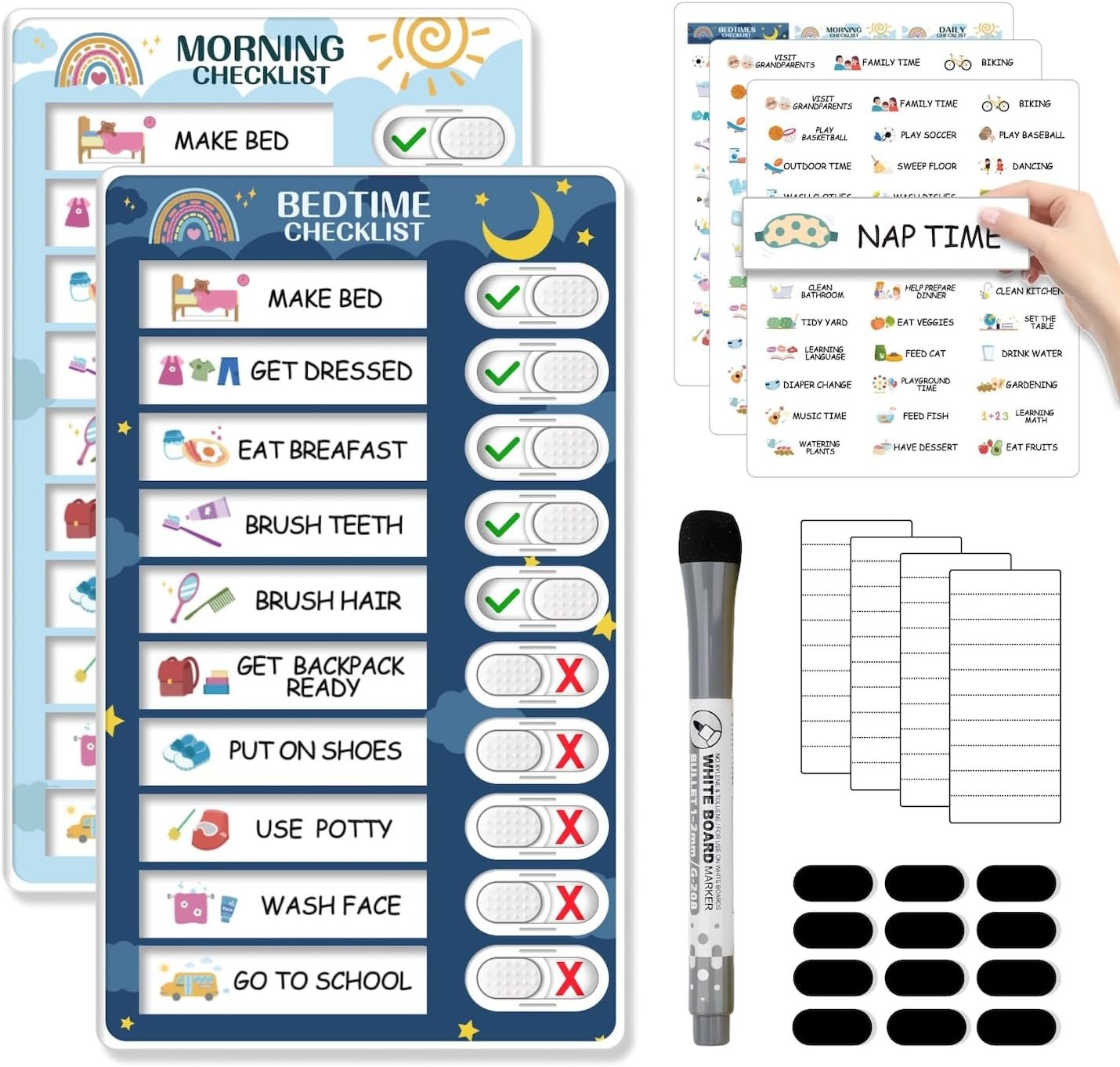
Establish a Routine: Routine is key for all kids no matter what they are doing. From morning, to getting ready for bed in the evening. at this point of the day everyone is tired and This can be a fun activity that you and your child can create together. Create a cute routine board with the steps they need to take to get ready for school. To make it more exciting get some stickers and let them put a sticker on the board when they are done with each step.
Morning Ritual: Every morning the routine needs to be similar. This is the time and place where you as a parent can train your children to get ready for the work world. I know, it’s too early to teach them this. But it really isn’t. If you are able to teach your children morning routine they will take this into their adult life. They know to be fast and efficient.
The Goodbye Ritual: this is the moment that I see the big difference between my two older kids. My son is at the age now that he’s rather go int class on his own and leave me at the car. Although I am suspicious that he just wants me out of his messy desk. My daughter still needs me to take her into class and help her set up for the day.
Welcome home Ritual: For our family this means that when I pick them up I have a snack, which they may or may not want based on the day. Then when we get home, we have a down time. I basically let them do whatever they want for a bit. On nice days we go to the park or for a walk. Anything to get their energy out!
Homework time: As I am a mom who teaches music from her home it can get pretty chaotic in our home in the evenings.
Learning & Growing: Tackling New Challenges
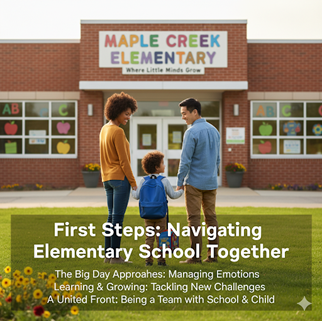
Weather your child’s first school is elementary school or daycare/preschool, how the first day is crucial to set up the rest of our child’s years to come.
Patience is Key: Every child learns at their own pace. Some will pick up reading quickly, while others might take more time. Avoid comparing your child to others.
Create a Learning-Friendly Home: Designate a quiet space for homework, provide age-appropriate books, and engage in conversations that encourage curiosity. Give them a room that has a space for learning and a space for playing. A desk in their room is one way to have a place to learn. Make sure that their study desk is free of clutter and other non-schools items. If you have to make a drawer reserved for school supplies, and books and a drawer with “fun things” for them to have.
Create a Learning-Friendly Home: Designate a quiet space for homework, provide age-appropriate books, and engage in conversations that encourage curiosity.
Don't Over-Schedule: While enrichment activities are great, ensure your child has downtime to play, relax, and just be a kid. Over-scheduling can lead to stress and burnout. I often feel that my children don’t really do as many activities as other children, and often feel that they may be left out, but the more I think of it, they seem to still be well rounded children who have focused activities rather than a multitude of them.
Don't Over-Schedule: While enrichment activities are great, ensure your child has downtime to play, relax, and just be a kid. Over-scheduling can lead to stress and burnout. I often feel that my children don’t really do as many activities as other children, and often feel that they may be left out, but the more I think of it, they seem to still be well rounded children who have focused activities rather than a multitude of them.
This morning and night-time checklist is great for my son especially, to help get ready in a timelier manner. I have recently switched from making my own on paper, which I talk about in a different post, to this one. I felt like the paper one was not enough for my kids and with them being more involved in checking off their finished jobs they are more organized.
Prioritize Downtime and Relaxation: It's essential to ensure your child has plenty of time to unwind, play, and simply be a kid. While it can be tempting to fill their schedule with enrichment activities, overscheduling can easily create unnecessary stress and pressure that these days we cannot afford. Even though I sometimes feel guilty that my children aren't involved in as many activities as others, I've realized that giving them space to relax helps them recharge and enjoy their free time and be better kids. Of course, my kids are involved in activities, and usually they are focused on one activity at a time. By focusing on just a few select activities, they can develop deeper skills and interests without feeling overwhelmed. Ultimately, allowing time for rest and relaxation supports their well-being and helps them excel in the activities they truly enjoy. I do hope that eventually as they get older, they will be involved in more sports. But for now, we enjoy our down time.
Monitor for Learning Differences: As parents we know our kids better than anyone. If you notice your child struggling, addressing it early can make a huge difference. As a mom I understand that moment that a teacher tells you that your child is having a hard time with something. I remember when my daughters teacher told me that my daughter was falling behind in kindergarten!! I felt like a failure. My mind was spinning and I began to panic. As a mom my mind began to race with all the possible issues that may arise from her struggling to write letter. I had to slap my self back into reality and remind myself she will be fine and after working with her a little she was! Who knew….
If you are already aware of struggles make sure to add that to the “meet my child” card for the teacher. Usually teachers like to have cards that allow you to write in their strengths and weaknesses. Don’t feel embarrassed if your child has a hard time with certain aspects of learning. Allowing their teachers to know what they are, will allow you to work better with their teacher in the future. Remember, every child thrives better with the right support.
Focus on Effort, Not Just Outcome: Remember that it is about the process of our student/child’s development, not just the achievements. When we look at our children’s schooling, we see that one day they will graduate from high school and college and have to live life independently. And at times we forget that there is a whole middle part of their schooling. This is where we as parents can either help them succeed or be completely disappointed. We as parents need to know how to balance the criticisms with praise!
Celebrate Small Victories!!!
When you child comes home and says “mom guess what? I made a new friend”. Ask questions about this friend. At times as a parent, it can be so easy to just ask how school was, how your day. Instead, ask them more specific questions. “What was your biggest achievement?” or “Who did you play with today at the playground, and what game did you play.... What are the rules of the game?” “Did you win?” These questions are what your child will tell you the best things about. If you hear that they failed a test wait till later to battle this. They don’t care about their good grades or failed tests at a young age, or if they finished a good project, their focus is if they had a friend to play with. Tell them that you’re proud of their achievements as well, try not to move past what they have said too fast.
A United Front: Being a Team with School and Your Child
The most effective way to ensure your child's success and well-being in elementary school is to foster a strong partnership between you, your child, and the school.
Communicate Openly with Teachers:
Children spend six hours a day at school—often more time with their teachers than with us! How sad is this. I remember when I heard this for the first time when I worked with kids before I became a mom. I couldn’t believe it! I always tried to give families thoughtful, honest updates because teachers are one of your most valuable resources. This included seeing pictures to the parents. Yes, this is a form of communication. Now, I’m not sure that teachers want you to send pictures of your child Attend conferences, reply to emails, and share any insights that may help your child succeed.
Be Involved (But Don't Hover):
Volunteer in the classroom, join the PTA, or help with school events if you can. Many schools are desperate for parent helpers. And you will be loved by any teacher whose classroom you walk into with a plan in mind. A little secret that I have to add to this is, that before you go into the class or when you do for the first time to help, try to get to know the teacher and her personality because you don’t want to overstep, or make her feel as though she or he has another student to worry about.
Support School Rules and Values:
You are your child’s educator and role model first, and your child’s school is their educator second. Remember this as you teach you child to follow rules. If you don’t agree with something that the school is doing, be open with them and talk to them about the reasons that the specific rules are given and how they are implementing them. You will never know unless you ask. It is up to your discernment what you as the parent should do.
Encourage Independence:
As our children get older, they crave to be more independent. As parents it is our role to support and nurture this independence.
Nurture Their Growing Independence: As our children grow, their yearning to spread their wings and discover the world on their own becomes stronger with each passing year. As parents, it is our privilege and tender responsibility to gently support and encourage this blossoming independence, even when it tugs at our hearts. Guiding them as they learn to make their own choices and explore new challenges is one of the most profound gifts we can offer, knowing that with every step they take, they are building confidence and resilience for the journey ahead.
I’ll never forget the first time my daughter told me she didn’t need me to walk her to class after watching her brother do so for the first part of the year. My heart! It hurt a little that day. I wanted so bad for her to turn around and ask me to take her in, but she didn’t.
In hindsight I see that this is a step that we all had to take at one point in our lives, and today it was her turn. It made me look back to her first month of school and how scared she was to go into lass by herself. Looking back to how hesitant she was then, I realize how much she has grown. These moments remind us that independence arrives quietly, often before we are ready for it.
Listen to Your Child: Pay attention to what your child tells you about their day, their friends, and their teachers. This is crucial. As you are away from your child all day, you need to know what is happening at school from their perspective. Obviously, they want to tell you about their day especially after all your questions. But use this time to read between the lines. Ask open-ended questions that encourage more than a "yes" or "no" answer. As their school day ends their day at home begins. Do you know how your child is feeling at this time? What is more crucial than asking them questions is understanding their answers. Are they being bullied at school? Are they struggling in a certain subject? What is your child really telling you? Maybe they don’t want to tell you straight forward that they are having a hard time, but you can hear it in their voice. Don’t ignore this.
Address Bullying Promptly: If bullying is becoming a concern- whether your child is experiencing it or seeking out and contributing to bullying- partner with your school immediately. Swift action helps protect not only your child, but others who may be struggling slightly.
As I reflect on my own children’s school experiences, I’m reminded that not every child begins the year with the same support system. Some may not have consistent meals, a stable home, or loving parents to return to. For many, the first day of school represents safety, comfort, and connection. As parents- especially those of us guided by faith- we have an opportunity to extend kindness and generosity to families who need it most, especially during the holiday season when this piece was originally written.
Proverbs 31:25: "She is clothed with strength and dignity; she can laugh at the days to come,"
